
International Day of Yoga @ Abuja








- Nigeria
- 7th International Day of Yoga 2021
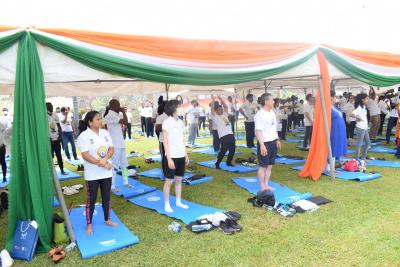
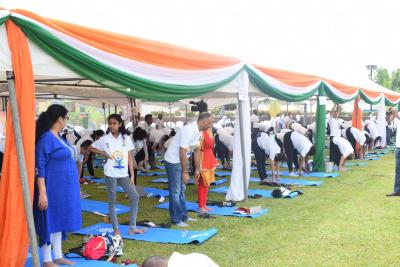
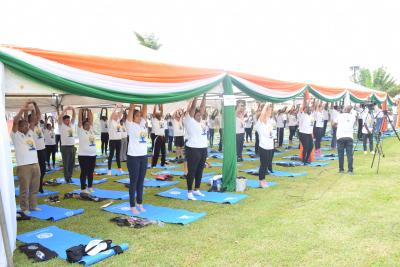
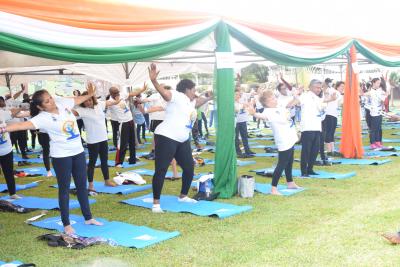
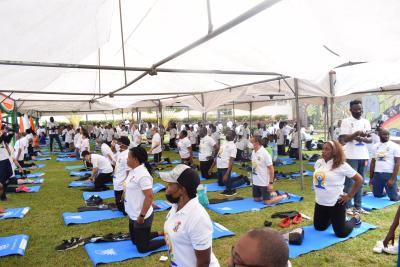
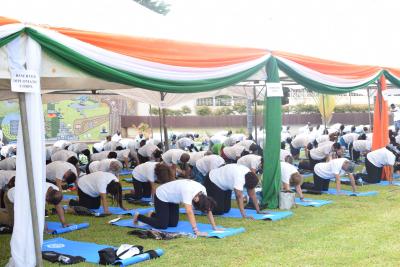
The 7th International Day of Yoga was celebrated at our premises today (19 June 2021), with nearly 350 participants in-person and over 1000 on FB live. High Commissioner Abhay Thakur welcomed senior officials from the Nigerian Presidency, Ministries of Health, Sports and Defence, Diplomatic Corps, Indian community, & yoga enthusiasts, and thanked Govt. of Nigeria for its support. The enthusiasm for the theme “Yoga for Wellness“ was immense.
- Read more about International Day of Yoga @ Abuja
- Log in to post comments
International Day of Yoga @ Sierra Leone



- Sierra Leone
- 7th International Day of Yoga 2021
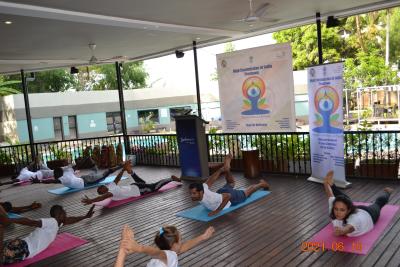
High Commission celebrated IDY2021 and India@75 in Freetown with Sierra Leone Yoga enthusiasts.
- Read more about International Day of Yoga @ Sierra Leone
- Log in to post comments
International Day of Yoga @ Johannesburg, South Africa





- South Africa
- 7th International Day of Yoga 2021
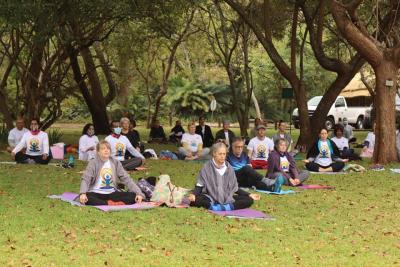
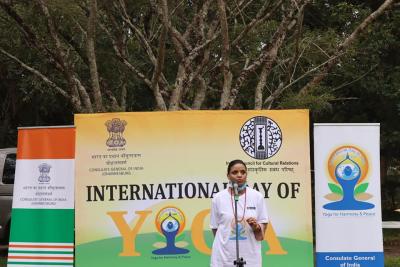
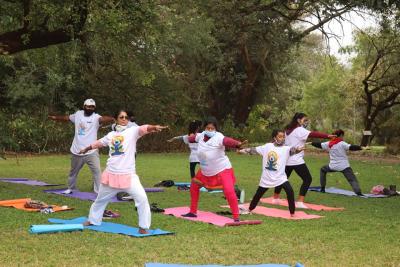
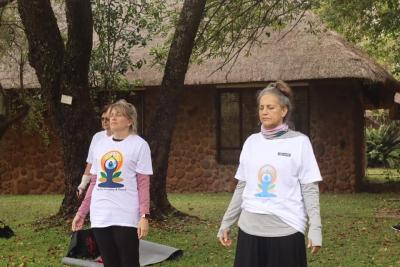
The last #Outreach_Yoga_Camp during #IDY2021 was held today at the Lowveld National Botanical Garden, Nelspruit, Mpumalanga province, with uplifting participation of around 90 people from diversified communities.
Consul General Ms. Anju Ranjan shared her positive tryst with #Yoga during the Covid that helped her in improving the breathing capacity and immunity.
She acknowledged the enthusiasm of local community towards #Yoga who came and participated cheerfully despite adverse weather conditions.
7th edition of International Yoga Day in Madrid


- Spain
- 7th International Day of Yoga 2021
Sneak peek at the 7th edition of International Yoga Day in Madrid. Over 200 participants in the iconic CountDuqueMAD
Thanks to Madrid City Council, Madrid Fate and yoga schools for collaborating 
International Day of Yoga @ Sri Lanka


- Sri Lanka
- 7th International Day of Yoga 2021
What better way to start a Sunday than with a session of Yoga, Pranayama and meditation, as #IDY2021 celebrations continued with participants from across the country enjoying a session of Yoga from home and with family. The event ended with a short cultural performance and the announcement of winners of various Yoga themed competitions held over the last fortnight.
- Read more about International Day of Yoga @ Sri Lanka
- Log in to post comments
International Day of Yoga in Riga

- Latvia
- 7th International Day of Yoga 2021
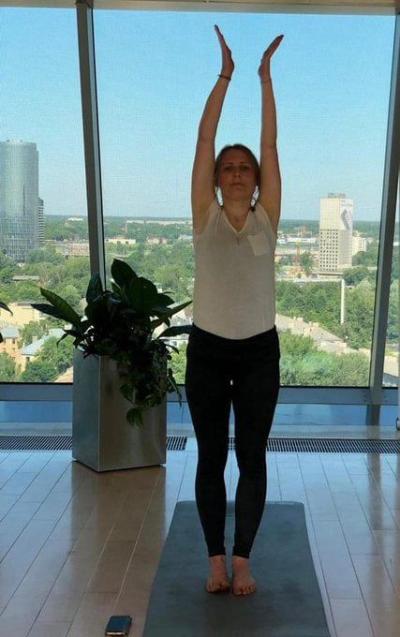
Yoga in Riga 
Panorama view
Riga and Daugava River
From the iconic National Library in the beautiful capital city of Latvia
- Read more about International Day of Yoga in Riga
- Log in to post comments
International Day of Yoga @ Tashkent


- Uzbekistan
- 7th International Day of Yoga 2021
Yoga Federation of Uzbekistan is celebrating 7th International Day of Yoga today at Eco Park, Tashkent with great fervour. Yoga teacher deputed by Indian Government to join the Yoga Federation of Uzbekistan soon.
- Read more about International Day of Yoga @ Tashkent
- Log in to post comments
International Day of Yoga @ Azerbaijan


- Azerbaijan
- 7th International Day of Yoga 2021
As part of 7th International Day of Yoga #IDY on 21st June 2021, Hyder Aliyev Center, Baku organized a Yoga session on June 19, 2021.
- Read more about International Day of Yoga @ Azerbaijan
- Log in to post comments
International Day of Yoga 2021 Australia


- Australia
- 7th International Day of Yoga 2021
Sydney Celebrates International Day of Yoga 2021. CGI Sydney in association with SRMD Australia celebrated IDY 2021 at Bradfield Park in the backdrop of iconic Sydney Opera House and Harbour Bridge Sydney.
- Read more about International Day of Yoga 2021 Australia
- Log in to post comments
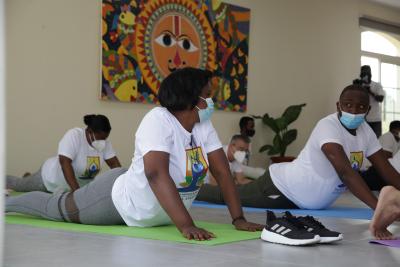
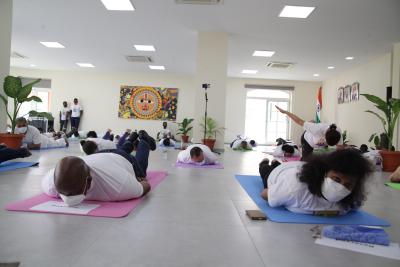
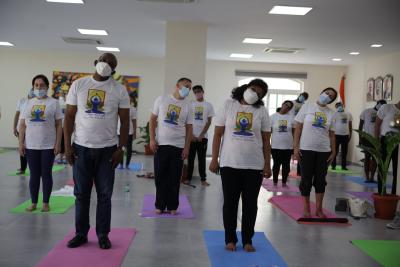
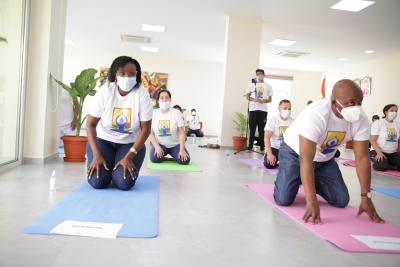
The 7th International Day of Yoga 2021 was celebrated in Luanda





- Angola
- 7th International Day of Yoga 2021
The 7th International Day of Yoga 2021 was celebrated in Luanda with participation of local dignitaries, Ambassadors and distinguished members of Indian diaspora. H.E Mr Jomo Fortunato, Minister for Culture, Tourism and Environment, Republic of Angola was the Guest of Honour. H.E Ms Pratibha Parkar highlighted the importance of Yoga in her message and encouraged people to adopt it in their daily lives.
“योग विज्ञान है” – ओशो
योग विज्ञान है, विश्वास नहीं। योग की अनुभूति के लिए किसी तरह की श्रद्धा आवश्यक नहीं है। योग का इस्लाम, हिंदू, जैन या ईसाई से कोई संबंध नहीं है।
जिन्हें हम धर्म कहते हैं वे विश्वासों के साथी हैं। योग विश्वासों का नहीं है, जीवन सत्य की दिशा में किए गए वैज्ञानिक प्रयोगों की सूत्रवत प्रणाली है। इसलिए पहली बात मैं आपसे कहना चाहूंगा वह यह कि योग विज्ञान है, विश्वास नहीं। योग की अनुभूति के लिए किसी तरह की श्रद्धा आवश्यक नहीं है। योग के प्रयोग के लिए किसी तरह के अंधेपन की कोई जरूरत नहीं है।
नास्तिक भी योग के प्रयोग में उसी तरह प्रवेश पा सकता है जैसे आस्तिक। योग नास्तिक-आस्तिक की भी चिंता नहीं करता है। विज्ञान आपकी धारणाओं पर निर्भर नहीं होता; विपरीत, विज्ञान के कारण आपको अपनी धारणाएं परिवर्तित करनी पड़ती हैं। कोई विज्ञान आपसे किसी प्रकार के बिलीफ, किसी तरह की मान्यता की अपेक्षा नहीं करता है। विज्ञान सिर्फ प्रयोग की, एक्सपेरिमेंट की अपेक्षा करता है।